Exploring the Role of Art in Emergency Management and Disaster Mitigation in the Context of Global Warming and Rising Sea Levels
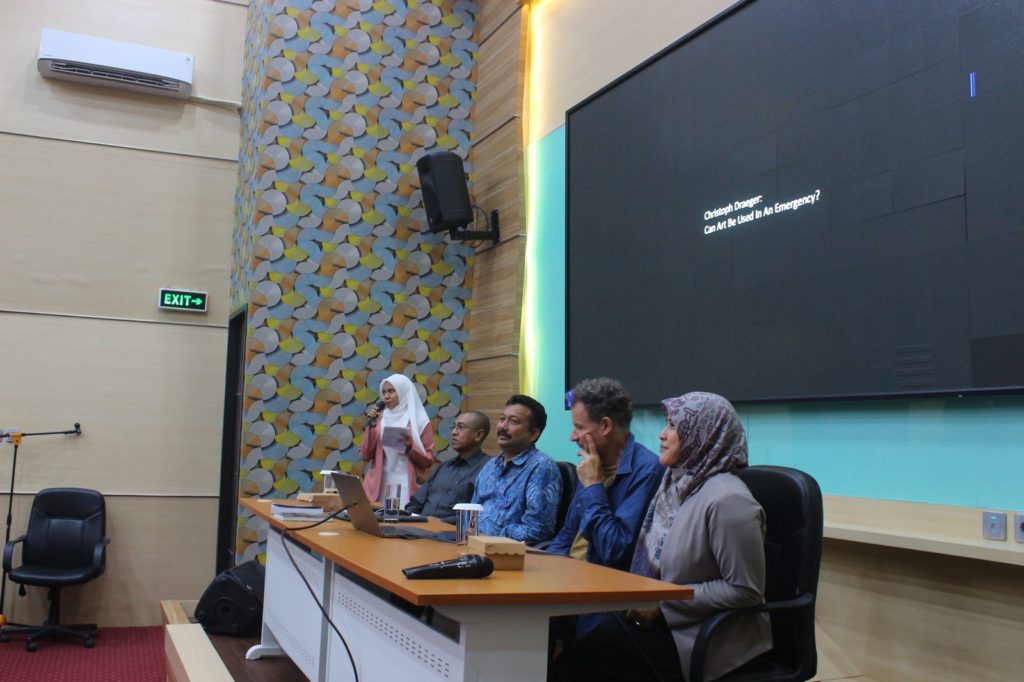
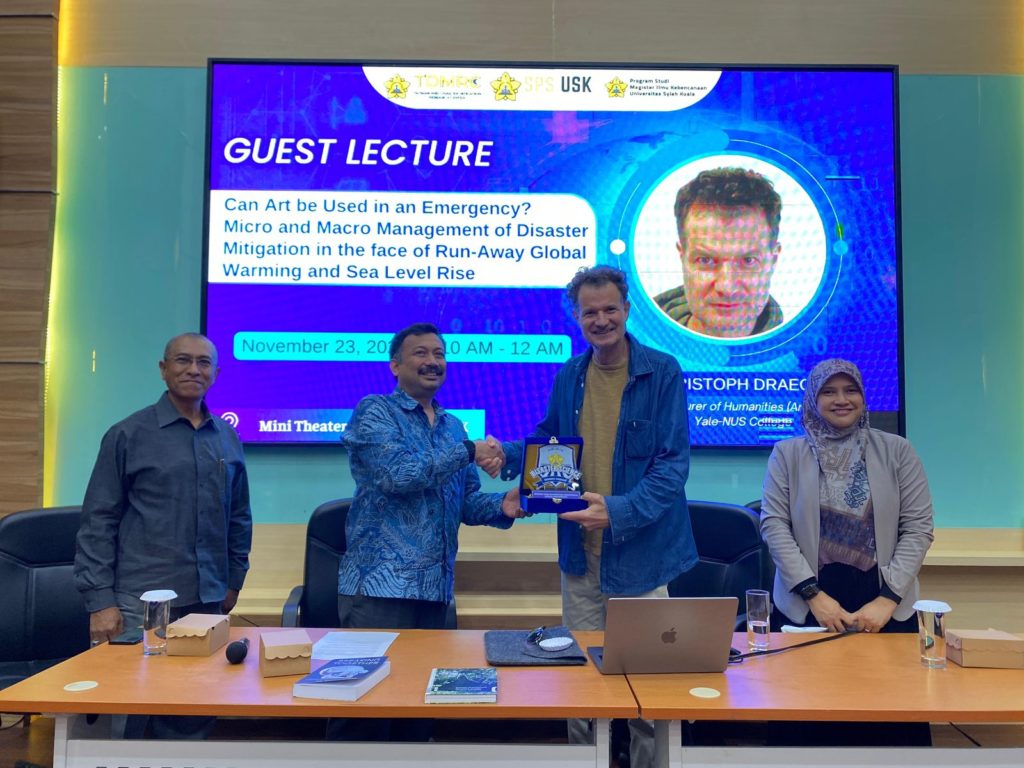
The Graduate Program in Disaster Science (Prodi MIK) at Universitas Syiah Kuala (USK) recently organized a guest lecture featuring Christoph Draeger, a Senior Lecturer in Humanities (Arts Practice) from Yale-NUS (National University of Singapore). The lecture, titled “Can Art be used in an emergency? Micro and Macro management of disaster mitigation in the face of Run-Away Global warming and sea level rise,” was a response to the challenges posed by climate change and aimed at enhancing disaster preparedness through various fields of study, particularly in the realm of art.
The event attended and inaugurated by the Director of USK’s Graduate School, Prof. Dr. Hizir, emphasized the need for concrete action to address climate change impacts. Prof. Dr. Hizir highlighted that tackling the consequences of climate change is a responsibility shared by individuals across all sectors, including the realm of art.
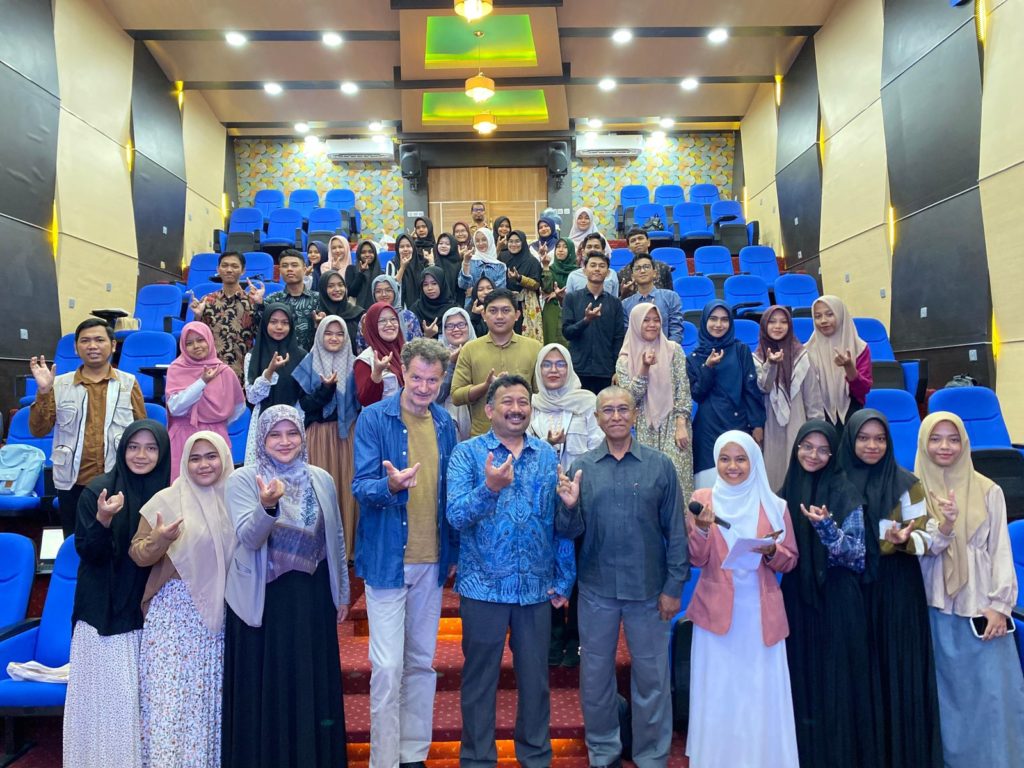
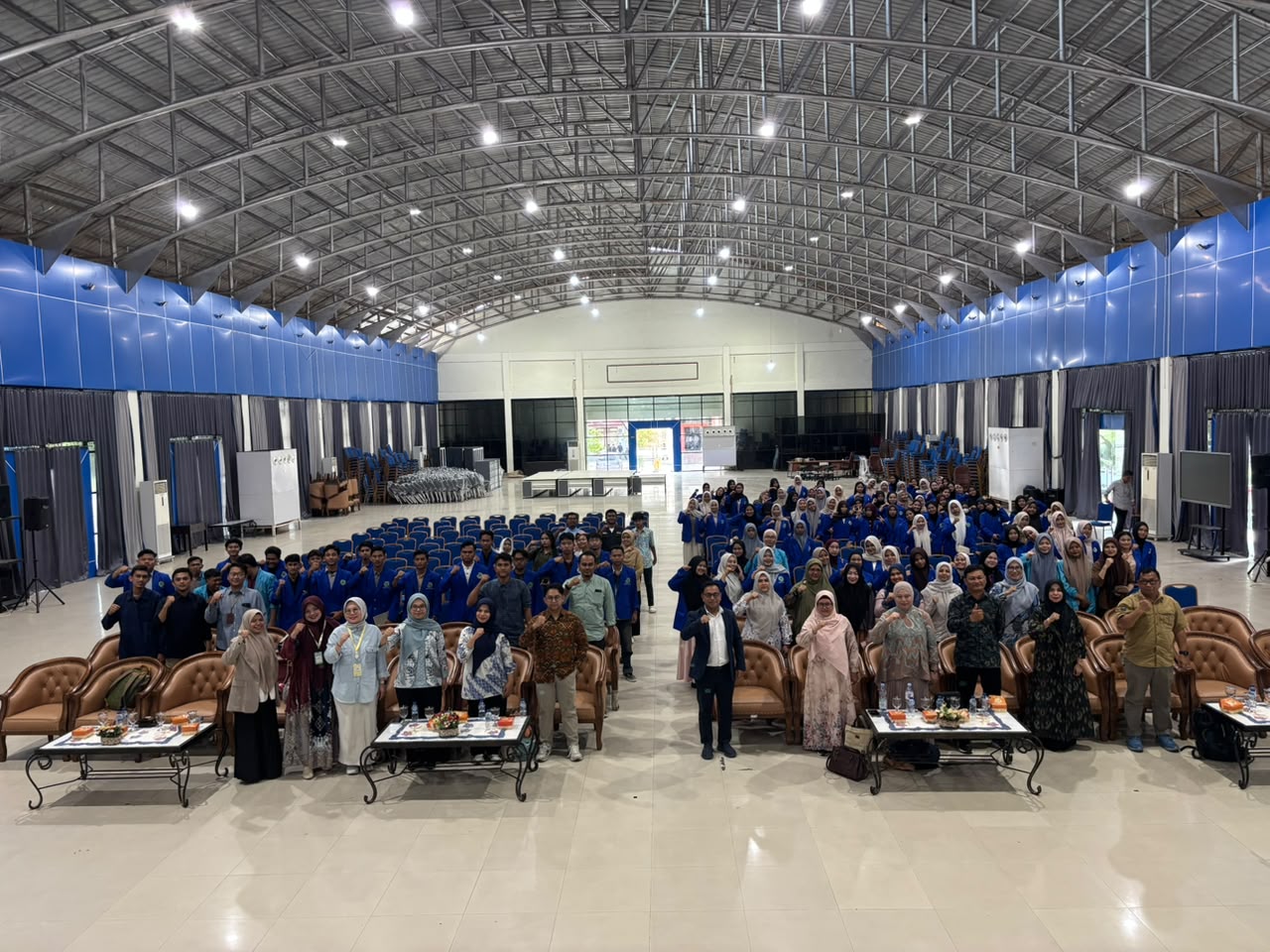
During the lecture, the Master’s Program in Disaster Science presented Christoph Draeger with a token of appreciation, handed over by Prof. Dr. Hizir. The event, held on a Wednesday morning in the Graduate School’s Mini Theater, drew participants from various backgrounds, including students, NGOs, and the general public, with the room reaching its full capacity of 65 attendees out of the total 58 participants.
Christoph Draeger, drawing on a decade of experience in exploring the role of art in disaster mitigation, expressed the vital role of education and knowledge in facing climate change impacts. He emphasized that art serves as a means to express and capture moments that cannot be encapsulated through words alone.
Addressing a variety of questions during the Q&A session that followed, Draeger discussed the influence and contribution of art in reducing the impacts of climate change. The enthusiastic participation of attendees, including questions from USK’s doctoral students and inquiries from the Medical Program, demonstrated a keen interest in the relationship between art, psychology, and the mitigation of climate change impacts.
In her closing remarks, Dr. Rina Suryani Oktari, the Head of the Disaster Science Master’s Program, expressed admiration for Draeger’s presentation, emphasizing the crucial role of art in educating communities, not only during emergencies but also in preparation for such situations. The 120-minute guest lecture received overwhelmingly positive responses, particularly from students in the social sciences, indicating a newfound appreciation for the contribution of art in disaster risk reduction.
Nadya, an Economics student, shared her excitement about discovering how art contributes to reducing disaster risks, expressing hope for similar events in the future. The success of this guest lecture underscores the importance of interdisciplinary approaches, bringing together art and disaster science for a more resilient and knowledgeable society.